Advancing In Vitro Modelling in AMR Research
Interview with Marie Attwood: GNA NOW
The Gram-Negative Antibacterials NOW (GNA NOW) Consortium is committed to developing completely novel compounds derived from previously unknown natural compounds with new modes of action. One of the project’s objectives is to develop a quality management system for in vitro pharmacokinetic and pharmacodynamic (PK/PD) models in preclinical science to improve predictions of clinical outcomes. Marie Attwood, the GNA NOW PK/PD expert, shared her perspective on scientific passion and the challenges of AMR research.
What was your journey in the AMR research and pharmacokinetic and pharmacodynamic (PK/PD) modelling, specifically?
I began my research career at the University of Brighton, where I completed an accredited Biomedical Sciences degree (BSc). Whilst all the modules and teaching staff were excellent, I found microbiology particularly interesting. Shortly after graduating, I got a job in the diagnostic microbiology laboratory at Southmead Hospital. Truthfully, I was waiting for a Biomedical Scientist position to become available. Coincidentally, there was a job advert in the Microbiology research department (PK/PD), so I thought it would be a good opportunity to develop some more skills and learn about in vitro modelling systems. I found out that PK/PD research requires you to understand the fundamental microbiology principles, it combines practical skills, encourages creativity and plays a big role in AMR stewardship. I have always wanted to have a meaningful career, but I just didn’t know what that looked like. Initially, it was the practical and creative elements which intrigued me when I started in a PK/PD technician role. Now, over 10 years later, I am the PK/PD project manager and head research scientist. The pharmacokinetic and pharmacodynamic aspects, which were a mystery to me when I began, now keep me engaged, inspire research projects/grants, and keep me dedicated to this field.
I feel incredibly fortunate to have had the opportunity to be trained in this niche speciality, to work alongside wonderful colleagues — leaders in the field of PK/PD — and to have the privilege to teach future generations of scientists, and to see the expansion of the antimicrobial reference laboratory and implementation of the bioanalytical laboratory.

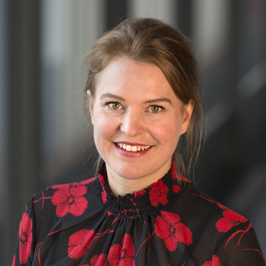
Marie Attwood is a Head Research Scientist at Southmead Hospital, North Bristol NHS Trust, UK.
Research never goes smoothly, and progress is not linear. You need to have enough belief and confidence in yourself to pause, reflect, perhaps change the approach, but ultimately try again.”
What is your research focus in the fight against AMR?
My research area is primarily based on pharmacodynamics (PD), an expanding and well-established field. Many PD evaluations occur in vivo; however, we exclusively employ the use of in-vitro modelling systems (dilutional or hollow fibre), which complements in vivo work, allowing more robust data analysis. There are various types of simulations which can be performed, such as simple investigations of post-antibiotic effect, dose ranging and more complex dose fractionation studies using continuous bacterial culture. These models enable intravenous, intramuscular, inhalation and oral drug concentration serum profiles to be studied. The versatility of the dilutional model allows us to mimic specific target sites, such as UTI or Pulmonary applications. All model types can be employed to evaluate single antibiotic, combination antibiotic, and novel therapies (such as bacteriophage or bacteriophage and antibiotic interactions). Data from these simulations allows us to inform optimum target drug concentrations, dosing frequency and duration, whilst aiming to prevent the emergence of resistance.
What are some of your biggest challenges in your topic?
Funding is always an issue, whilst the techniques used within the PK/PD lab provide valuable information for collaboration projects and ultimately regulators (Medicines & Healthcare products Regulatory Agency, European Medicines Agency, etc) in terms of dose justification, the cost of in vitro modelling simulations is not cheap. We are one of the few labs globally which can perform this type of work, but this means we have to be selective about which projects are performed. There has, however, been more investment from government-based initiatives related to AMR recently.
From a technical point of view, preventing the emergence of resistance is perhaps the biggest challenge. Combination therapies, including antibiotics, peptides, phage, enzymes, lysins, etc, appear to be a viable way to combat this.
How do you see the field of AMR research evolving in the next decade?
I see innovation harnessing novel therapies and new technologies, such as Artificial Intelligence (AI) and Machine Learning (ML), being utilised. I have seen compelling data which uses AI to determine antimicrobial susceptibility testing (AST), and we are collaborating with teams (including teams within the IMI AMR Accelerator: read the interview about this work) to apply machine learning to the data generated in the PK/PD laboratory.
What scientific advancements are you most excited about?
One of the most exciting developments in AMR research, I think, is the use of Artificial Intelligence to help find new antimicrobial compounds and targets. It’s still a growing area, but it seems really promising because it can speed up the discovery process and help us explore options we might not find otherwise.
What advice would you give other researchers or students interested in AMR research?
You need to be resilient, adaptable and be prepared not to be perfect. Research never goes smoothly, and progress is not linear. You need to have enough belief and confidence in yourself to pause, reflect, perhaps change the approach, but ultimately try again. I have learnt so much more from my mistakes than from any first-time success. A calm, systematic approach generally helps when things aren’t going according to plan. If all the possibilities have been explored, find the courage to ask for advice; collaborations aid progress for both parties. When required, have the determination to improve yourself, the process, or the entire system. Remember why you wanted to have this career in the first place and enjoy it. I am incredibly fortunate to have a career which I love. Sometimes things are challenging, but I couldn’t imagine doing anything else. Finally, everything in life can be a lesson. Do your best to keep your eyes open, keep an open mind and remember to embrace every opportunity.
“Failure is not falling down but refusing to get up.”
How do you stay motivated and passionate about your work?
The team members (established and new) keep me motivated in different ways. More established members have supported me over the years in teaching practical skills, adaptability, data analysis and management skills, which were done through tailored mentoring. However, today, these members of staff support me when I have a research idea (or if they have a research idea) via sense checking, assistance in applying to funding bodies/grants, and perhaps more importantly, spell-check my publications/ applications (being dyslexic has its advantages and disadvantages). This job role is difficult at times, but their enthusiasm and work ethic have been inspiring and unwavering.
The newer members of the team are full of enthusiasm and ideas, which is contagious. Teaching and seeing their progress within our lab, in confidence and/or when they are promoted, keeps me passionate about what we do at Bristol. I often hear that once people have graduated from University, they find it hard to find a relevant laboratory role and often go into other sectors, which is a shame. This keeps me motivated to keep working hard, applying for grants/collaboration projects, which allows us to hire staff, allowing people the opportunity to get involved in research.
Register for the webinar with Marie on 9 December 2025 to hear more about standardisation of in vitro evaluation systems.
Want to know more? Take a look at the publications from GNA NOW:
- Fernow J, Olliver M, Couet W, et al. The AMR Accelerator: from individual organizations to efficient antibiotic development partnerships. Nature Reviews Drug Discovery 2024. Published online September 23, 2024. doi:10.1038/d41573-024-00138-9. Green Open Access available through DiVA.
-
Pantel L, Guérin F, Serri M, et al. Exploring Cluster-Dependent Antibacterial Activities and Resistance Pathways of NOSO-502 and Colistin against Enterobacter cloacae Complex Species. Antimicrobial Agents and Chemotherapy. 2022;66(11):11. doi:10.1128/AAC.00776-2