AI and the Future of Antibiotic Discovery
Interview with Yojana Gadiya: COMBINE & GNA NOW
The COMBINE project has developed an AntiMicrobial Knowledge Graph with machine learning (ML) models that can scan compound libraries to identify new antimicrobials, reducing the costs and complexity of antibiotic drug discovery. The insights from this work are now published in the Journal of Chemical Information and Modeling. The lead author, Yojana Gadiya, discussed the importance of her work and shared advice with other early-career researchers.
What is the area of your expertise in COMBINE and GNA NOW projects?
My research is centred on preclinical drug discovery, focusing on small molecules. I utilise a combination of in-house, public and proprietary resources to advance the discovery process. By aggregating and curating datasets from publicly available bioassays, chemical libraries, and biological studies, I aim to identify meaningful patterns and relationships using machine learning (ML) and artificial intelligence (AI) techniques combined with graph-based algorithms.
A key aspect of my work is ensuring that data and analysis methods adhere to the principles of Findability, Accessibility, Interoperability, and Reproducibility (FAIR). This is critical not only for enhancing the quality and transparency of research but also for enabling broader outreach and reusability of the tools and insights generated. As a data scientist, I consider it my responsibility to integrate these principles into the pipelines I develop, ensuring they are robust, scalable, and accessible to the broader scientific community. This dual focus on cutting-edge methodologies and FAIR compliance allows me to contribute meaningfully to advancing drug discovery while promoting open and collaborative science.
“I strive to bridge the gap between data science and biology, enabling more efficient and informed decision-making in the early stages of drug discovery.”
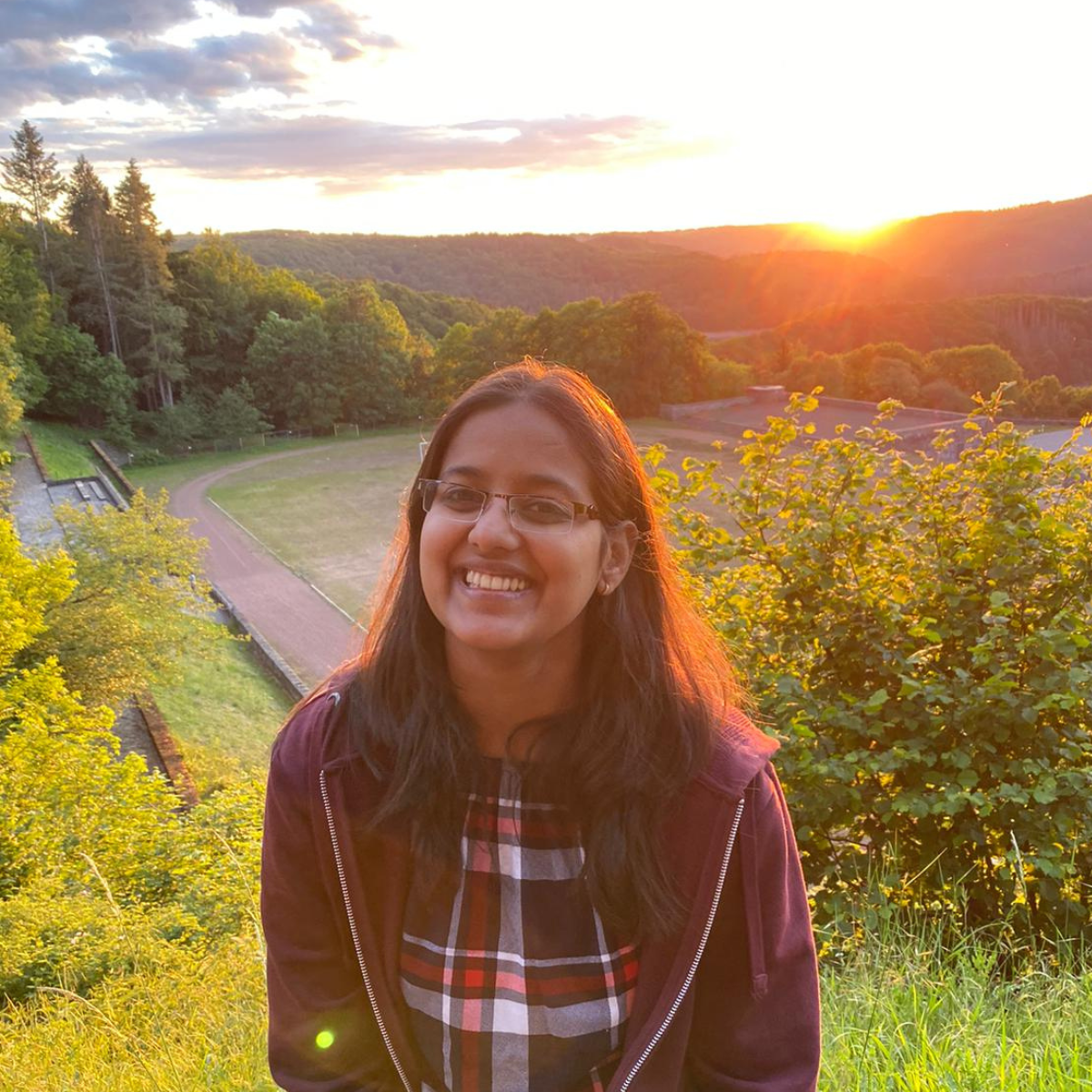
Yojana Gadiya is a Data Scientist and PhD student at
Fraunhofer Institute for Translational Medicine and Pharmacology (ITMP), Hamburg
What inspired you to pursue research in AMR?
I strongly believe in advancing drug discovery by exploring new therapeutic indications and unravelling the underlying etiology of diseases. My work integrates data-driven approaches with biological and chemical insights to address complex challenges in this field. By combining these techniques, I strive to bridge the gap between data science and biology, enabling more efficient and informed decision-making in the early stages of drug discovery.
How does your recent work fit into the bigger AMR picture?
I have developed context-specific knowledge graphs that map and visualise the intricate biological and chemical landscapes of diseases. These knowledge graphs serve as valuable tools for understanding disease mechanisms, identifying novel targets, and uncovering potential intervention points. The AntiMicrobial Knowledge Graph (KG) represents a knowledge graph with the first ever MIC (minimum inhibitory concentration) aggregated dataset in a FAIR-compliant format. In addition, I have built machine learning models designed to analyse and interpret large-scale datasets. These models aim to identify patterns and relationships that can guide the discovery of better pre-leads for drug development programs. The models are customisable and open source. They are also transparent, making it possible to decipher the physicochemical properties required for bacterial and fungal activity, supporting chemical optimisation in antimicrobial drug discovery.
Are you excited about the recent advancements in AMR research?
Generative models have recently gained significant attention in the field of drug discovery due to their ability to design novel compounds in silico. These models can potentially revolutionize the early stages of drug development by accelerating the identification of chemical structures with desirable properties. What excites me most about this technology is the avenue it opens when combined with activity prediction models. By integrating these two approaches, we can not only design novel compounds but also prioritize them based on their predicted activity profiles. This synergy could significantly enhance the efficiency of lead discovery, leading to better-quality pre-leads with a higher likelihood of success in later stages of development.
What advice would you give other researchers or students interested in AMR research?
For researchers interested in advancing in this field, my advice would be to actively seek out collaborations with experts across the globe and from diverse disciplines. Engaging with researchers from varied backgrounds not only broadens your perspective but also accelerates learning and growth in the most efficient and impactful ways. Collaboration provides opportunities to bring in fresh perspectives, foster innovation, and enhance the visibility of research among scientists and researchers—an essential aspect for early-career professionals. Within my project, I have successfully established external collaborations, notably with the CO-ADD initiative (The Community for Open Antimicrobial Drug Discovery) in Australia, to gain deeper insights into the data they are generating. To support this collaboration, I developed machine learning models using their dataset in combination with ChEMBL data to identify chemical features that could drive lead generation and optimization in antimicrobial drug discovery.
Given the field’s dynamic and rapidly evolving nature, it’s equally important to identify and connect with like-minded individuals who share your curiosity, passion, and enthusiasm. These connections can form a support network that helps you navigate challenges, fosters creativity, and keeps you motivated.
Lastly, remember to celebrate both the wins, big or small, and embrace the lessons that come from failures. Research is as much about discovery as it is about resilience and learning. Cultivating a mindset that values both success and setbacks will help you remain grounded and persistent throughout your journey.
How do you organise your work schedule?
A typical day for me begins with creating a to-do list to organize and prioritize the tasks I aim to accomplish. I find this helps me set a clear direction for the day and ensures I stay focused on my goals. Mornings are my most productive hours, so I dedicate this time to focused work, such as coding, analyzing data, and documenting progress. I intentionally keep my mornings free of meetings to maintain uninterrupted focus and momentum.
As the day progresses, I transition to mid-day meetings, which often involve brainstorming, discussing updates, or collaborating with colleagues and external partners. These sessions are essential for aligning on goals, exchanging ideas, and addressing challenges collectively.
Towards the end of the day, I review my to-do list, cross-checking completed tasks and identifying any that require immediate attention or have approaching deadlines. This reflection helps me plan ahead and ensures nothing critical is overlooked. By maintaining this structured yet flexible routine, I balance productivity with adaptability, allowing me to stay on track while accommodating the dynamic nature of my work.
Do you maintain a strict work/life balance?
I used to blur the boundaries between work and personal life, operating like a machine without pause. However, I eventually recognized the importance of setting clear limits and allowing myself time to unwind. Nowadays, on my days off, I immerse myself in activities like cooking or solving puzzles to stay engaged and relaxed. Reading books has also become a meaningful way for me to de-stress and find joy outside of work. Reading allows me to explore new ideas, unwind, and gain fresh perspectives, whether through fiction or non-fiction. It’s a great way to step away from work while staying mentally engaged.
Puzzles, on the other hand, are my go-to activity for relaxation and sharpening problem-solving skills. Whether it’s a jigsaw puzzle, a logic problem, or a challenging brainteaser, I love the sense of focus and satisfaction that comes with piecing things together. Both hobbies help me recharge and keep my mind active in different ways.
Read the full article online:
Gadiya Y, Genilloud O, Bilitewski U, et al. Predicting Antimicrobial Class Specificity of Small Molecules Using Machine Learning. Journal of Chemical Information and Modeling. Published online February 23, 2025. doi:10.1021/ACS.JCIM.4C02347
Want to know more? Take a look at other publications from COMBINE:
- Vera-Yunca D, Matias C, Vingsbo Lundberg C, Friberg LE. Model-based translation of the PKPD-relationship for linezolid and vancomycin on methicillin-resistant Staphylococcus aureus : from in vitro time–kill experiments to a mouse pneumonia model. Journal of Antimicrobial Chemotherapy. Published online May 9, 2025. doi:10.1093/jac/dkaf140
- Fernow J, Olliver M, Couet W, et al. The AMR Accelerator: from individual organizations to efficient antibiotic development partnerships. Nature Reviews Drug Discovery 2024. Published online September 23, 2024. doi:10.1038/d41573-024-00138-9. Green Open Access available through DiVA.
- Arrazuria R, Kerscher B, Huber KE, et al. Expert workshop summary: Advancing toward a standardized murine model to evaluate treatments for antimicrobial resistance lung infections. Frontiers in Microbiology. 2022;13:988725. doi:10.3389/fmicb.2022.988725
- Arrazuria R, Kerscher B, Huber KE, et al. Variability of murine bacterial pneumonia models used to evaluate antimicrobial agents. Frontiers in Microbiology. 2022;13:988728. doi:10.3389/fmicb.2022.988728
-
Bekeredjian-Ding I. Challenges for Clinical Development of Vaccines for Prevention of Hospital-Acquired Bacterial Infections. Frontiers in Immunology. 2020;11:533705. doi:10.3389/FIMMU.2020.01755